
Pepper Spray vs. Pepper Gel: Which Is Right for You?
When it comes to personal safety, there's no single "best" tool. There's the tool that's best for your situation.
Pepper spray and pepper gel both use the same active ingredient (oleoresin capsicum) to stop an attacker, but they behave differently once they leave the canister.
Here's how they actually compare, so you can pick the one that fits how you live.
| Pepper Spray | Pepper Gel | |
|---|---|---|
| Best if you... | want something simple and familiar, or live somewhere with extreme heat or cold | live in close quarters with others, deal with windy conditions often, or want less risk of the effects reaching anyone besides your target |
| Formula | Max Strength 1.4% MC; Same as gel | Max Strength 1.4% MC; Same as spray |
| Range | 10 feet; Same as gel | 10 feet; Same as spray |
| Wind | More likely to blow back | Less likely to blow back |
| Extreme temperatures | Liquid formula, less affected | Semi-solid, can freeze or melt |
| Impact if used | Particles can affect yourself and nearby bystanders | Less likely to affect anyone other than your target |
| Shop Pepper Spray | Shop Pepper Gel |
How They're Delivered
Safely pepper spray deploys as a direct stream, not a wide mist or fog.
Safely pepper gel also deploys as a stream, and it has the same spray range as the pepper spray.
Range and delivery aren't where these two differ. The real differences come down to how each behaves once it leaves the canister, and what happens after it lands.
Wind & Outdoor Conditions
Because gel is a thicker, heavier substance, it's less likely to blow back toward you in windy conditions than a finer spray.
That doesn't mean it's immune to wind. No pepper product is completely unaffected by weather. But gel's consistency gives it an edge when conditions aren't calm.
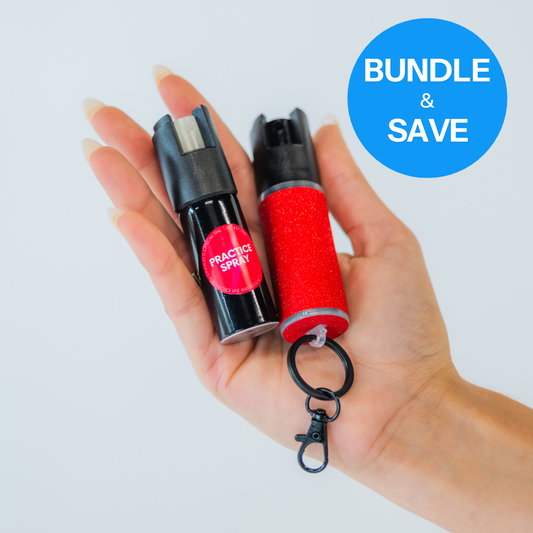
Bottom line: In windy conditions, gel's reduced blowback risk is worth considering. Always practice with a practice spray so you know how your specific product handles, regardless of which you choose.
Indoor & Close-Quarters Use
A spray's fine particles disperse into the air, which means anyone nearby, attacker or not, may feel its effects.
In a wide-open space with nobody else around, that's rarely an issue. In a dorm room, a car, a crowded area, or anywhere people are close by, it means you, bystanders, or roommates could also be affected.
Gel only affects what it directly touches. It doesn't disperse into the air the way spray does, so it's less likely to affect anyone other than your target, indoors or out.
Bottom line: Spray works fine in open spaces where nobody else is nearby to catch the drift. Gel is the safer call anywhere people are close by, whether that's a dorm room, a crowded sidewalk, or a windy day outside.
Cleanup
If gel makes contact, it can be wiped off. Because it's a thicker substance that sits on the surface of the skin, someone hit with it can physically remove much of it.
Spray behaves differently once it makes contact. Its fine particles disperse and settle into skin and mucous membranes rather than sitting on the surface, so wiping doesn't remove it the way it would with gel.
Both formulas also contain a UV marking dye that lingers on skin and clothing well after the initial effects wear off, regardless of which one is used.
Bottom line: This is a difference in how each product behaves after contact, not a claim that one works better than the other. It's simply worth knowing what to expect, for both you and anyone else it reaches.
Ease of Use
Both products are point-and-aim simple, and both deploy as a direct stream rather than a wide cloud, so accurate aim matters for either one.
Whichever you carry, the same rule applies: practice before you need it. A practice spray lets you build muscle memory risk free.
Climate & Temperature
Pepper gel is a thicker, semi-solid formula, which makes it more likely to freeze in extreme cold or melt in extreme heat.
Pepper spray is a liquid, oil-based formula, so it's less likely to be affected by temperature in the same way.
Bottom line: If you live somewhere with harsh winters or extreme summer heat, that's worth factoring into your choice to avoid your product becoming unusable.
Quick Decision Guide
Pepper spray may be the better fit if you:
- Want a product that's simple and familiar
- Aren't concerned about affecting people nearby your target
- Live somewhere with extreme hot or cold temperatures
Pepper gel may be the better fit if you:
- Live in a dorm, apartment, or other close quarters with others
- Deal with windy conditions often
- Want less chance of the effects reaching you or anyone nearby who isn't your target
Final Thoughts
Neither option is objectively better. They're built for different situations, and plenty of people carry both.
The right choice comes down to where you spend your time and what you're protecting against. Whichever you choose, the most important step is the same: practice using it before you ever need it, so it becomes second nature in a moment when you won't have time to think.